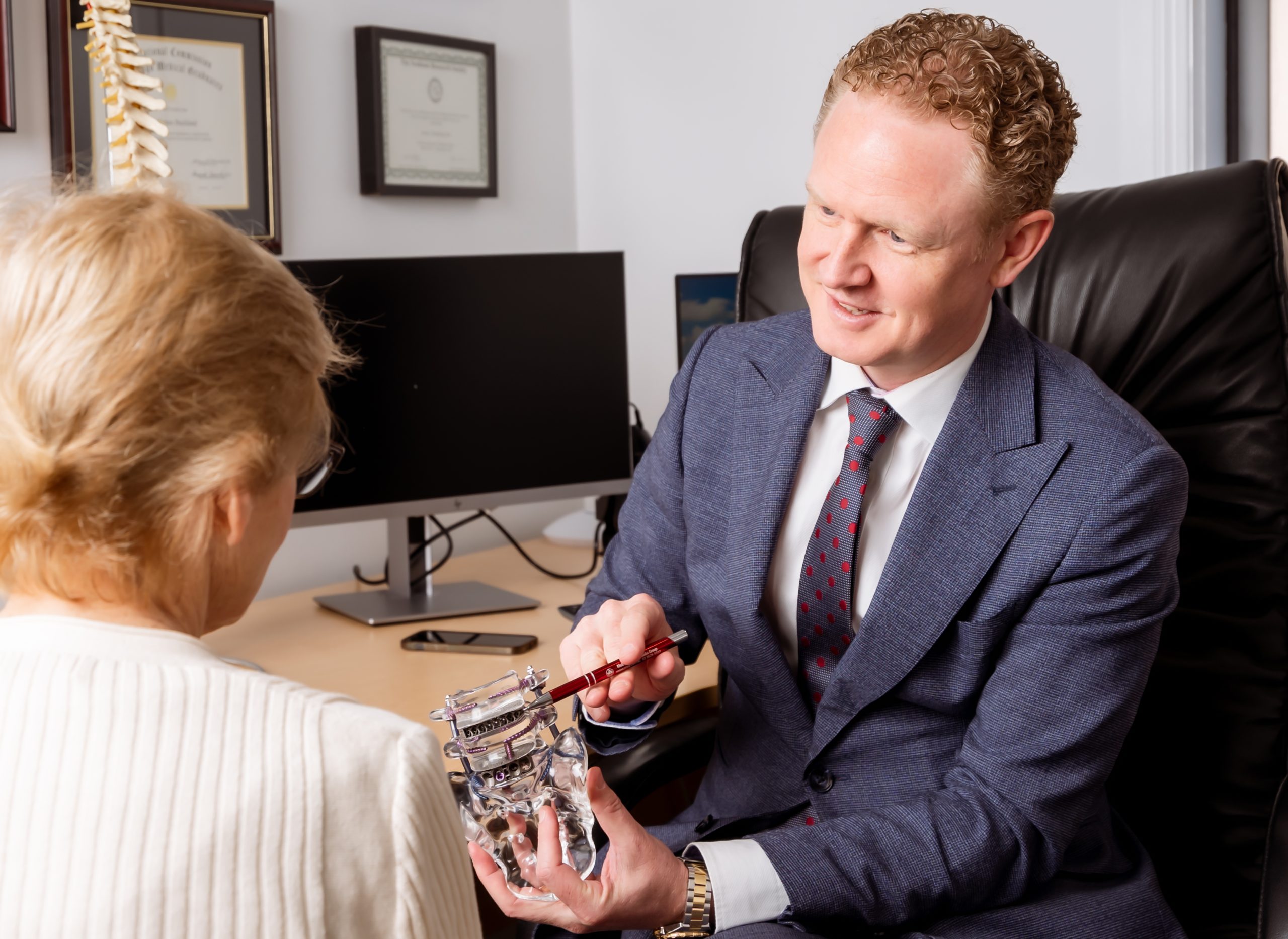
Melbourne, Australia – June 5, 2025 — In a groundbreaking advancement for spinal surgery, a new study has reported a 100% fusion rate using cutting-edge 3D-printed titanium (3DPTi) cages and advanced single-position surgical techniques. Led by Professor Aaron J. Buckland, MBBS, FRACS, of Melbourne Orthopaedic Group and Spine and Scoliosis Research Associates Australia (SSRAA), this research sets a new global benchmark for minimally invasive lumbar fusion procedures.
🔍 What Makes This Study So Remarkable?
Over four years, 100 patients underwent anterior or lateral lumbar interbody fusion (ALIF or LLIF), with a total of 137 fusion levels analyzed. Results were verified by CT scans and dynamic X-rays—delivering a fusion rate that’s nothing short of perfect.
🟢 97.1% achieved Grade I fusion (complete integration)
🟡 2.9% achieved Grade II fusion (partial, stable)
❌ 0 cases of pseudoarthrosis
“This is a world first,” said Prof. Buckland. “To achieve this level of consistency without the use of rhBMP-2 is a testament to the synergy between implant technology and surgical precision.”
🔩 3D-Printed Cages vs. Traditional Materials
Unlike traditional PEEK cages, 3DPTi cages provide significant advantages:
✔️ Superior bone-to-implant contact
✔️ Microporous surface for bone ingrowth
✔️ Structural rigidity with optimized integration
No cage migrations. No revisions. Only 4% of patients required unrelated surgeries within two years—a remarkable safety profile.
⚙️ Advanced Techniques, Safer Surgeries
The surgical team used single-position anterior-posterior lumbar fusion, eliminating the need to reposition patients mid-procedure. This resulted in:
🕒 Median operative time: 115 minutes
💉 Median blood loss: 100 mL
🛏️ Median hospital stay: 2 days
Fewer complications, faster recovery, and more efficient operating room logistics.
📈 Significant Patient Outcomes
One year after surgery, patients experienced life-changing improvements:
🎯 Oswestry Disability Index (ODI) dropped from 39 ➡️ 10
💪 Better spinal stability and mobility
💊 No need for rhBMP-2, reducing risks and costs
🧠 What It Means for the Future of Spine Surgery
This study highlights the unmatched potential of combining advanced materials and minimally invasive technique:
✅ Lower complication rates
✅ Faster recovery times
✅ Improved long-term patient outcomes
“This is the future of spinal fusion,” says Prof. Buckland. “And it’s already happening here in Melbourne.”
📘 Access the Full Study
Read the full research in the Global Spine Journal:
👉 https://journals.sagepub.com/doi/full/10.1177/21925682251344557
📩 Want to Learn More?
Visit Spine and Scoliosis Research Associates Australia to explore more on surgical innovation, clinical outcomes, and next-generation spinal care.